
If you’re scheduling a full HVAC system service with Valley Air Conditioning & Heating, LLC in Simsbury, CT, here’s exactly what to expect and why it matters. With more than 35 years serving Hartford and Litchfield Counties, our team focuses on repair‑first solutions and dependable care to keep your home safe, comfortable, and efficient season after season.
Before the Service: How to Prepare
Before your technician arrives, please clear access to both the indoor air handler or furnace and the outdoor condenser or heat pump so we can work safely. Do not remove equipment panels or attempt DIY internal checks; your technician will handle diagnostics and adjustments. Secure pets and make a note of any concerns you’ve noticed—unusual sounds, hot or cold spots, short cycling, or higher‑than‑normal energy bills so we can address them efficiently when we arrive.
What Happens During the Service Visit
A professional HVAC service is more than a quick once‑over—it’s a full system evaluation for safety, performance, and efficiency. Here’s what Valley technicians typically do during a comprehensive visit.
Initial System Inspection
We begin with safety‑first diagnostics. Your technician verifies the outdoor disconnect and indoor breaker, inspects wiring terminations for tightness or heat discoloration, measures voltage and amp draw against nameplate specifications, and tests critical safety devices (shut‑offs, sensors, pressure and limit switches). We also check thermostat placement and calibration, confirm mode changes, and ensure it communicates reliably with the system.
Airflow & Filter Optimization
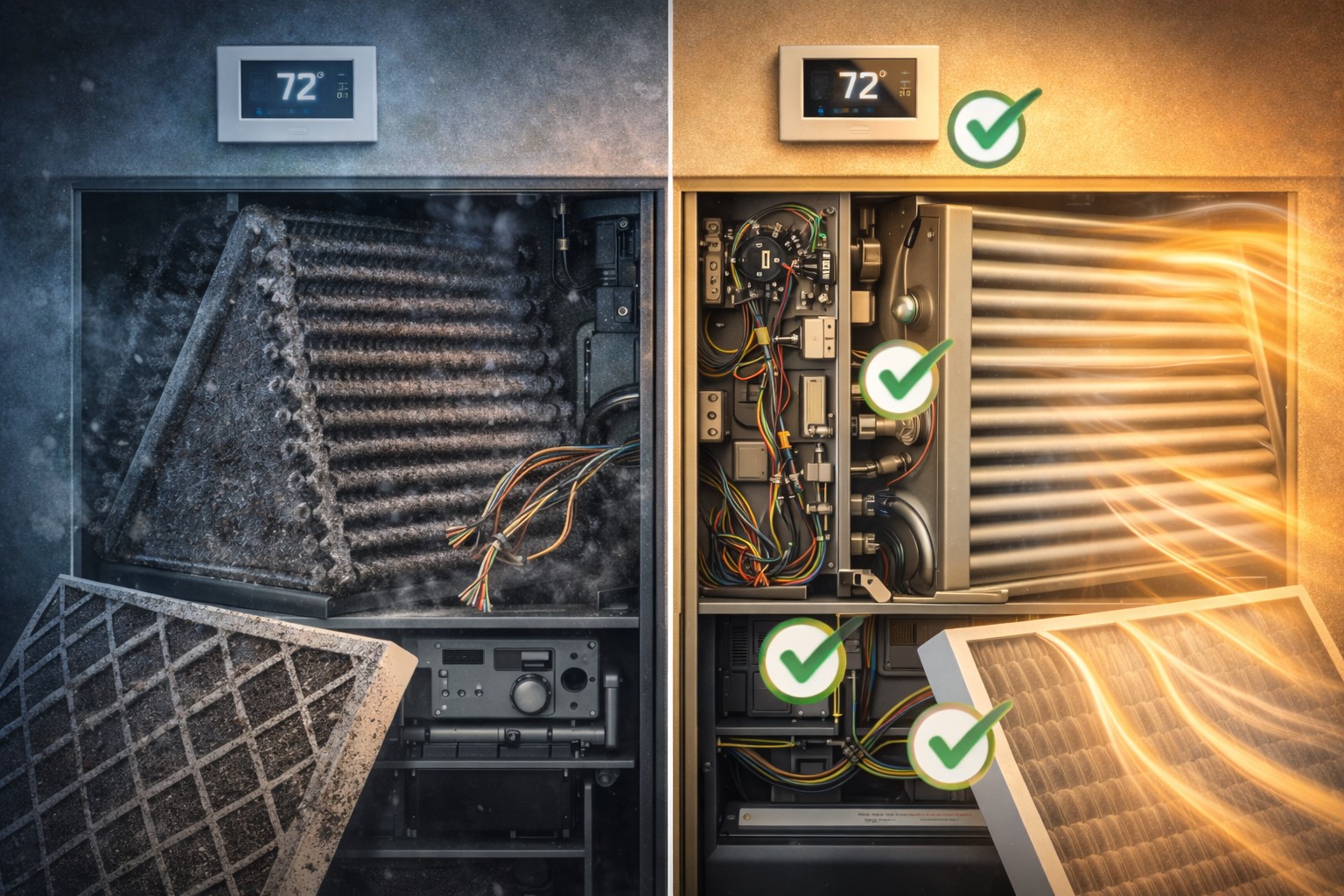
Healthy airflow is the backbone of comfort and equipment longevity. We confirm filter size, MERV rating, and orientation; replace if needed to prevent strain and maintain indoor air quality. We review return and supply pathways, dampers, and registers for blockages, and note any layout issues causing hot/cold spots. When indicated, we may take pressure readings to identify airflow restrictions and advise on simple corrections you can make.
Coil & Condensate Care
Clean heat‑exchange surfaces save energy. We clean the evaporator and condenser coils to remove dust, pollen, and debris that force the system to work harder. We inspect the condensate pan and line, clear clogs, and verify proper drainage slope to help prevent leaks and microbial growth. If a float switch is present, we test it for reliable shut‑off protection.
Mechanical Component Inspection
We examine the blower wheel, motor, fan blades, belts, bearings, and mounts for wear, imbalance, or damage. Where applicable, we lubricate moving parts, set proper belt tension, and correct rattles or vibration to protect components and reduce noise. We also assess related controls—such as capacitors and contactors for signs of overheating or pitting and recommend timely, repair‑first fixes when needed.
Seasonal Function Testing
In heating mode, we verify safe ignition and flame sensing, inspect burners, check flame quality, and examine the heat exchanger for cracks or corrosion. Where applicable, we perform a carbon monoxide safety check and review venting and draft. In cooling mode, we measure refrigerant pressures and temperature readings (such as superheat and subcooling) per manufacturer guidelines, look for signs of leakage or oil staining, verify condenser fan operation, and confirm an appropriate supply/return temperature split. For heat pumps, we also verify defrost operation.
Final Performance Evaluation
We run the system through a complete cycle to confirm even heating or cooling, proper staging or zoning response, healthy airflow, and accurate thermostat communication. We document readings, share what they mean in plain language, and prioritize recommendations so you can decide confidently—aiming to repair first and only discuss replacement when it’s the smarter long‑term move.
Why our approach matters: catching minor issues early helps you avoid surprise breakdowns, save energy, and protect your investment without pushy upsells.
Why Routine HVAC Service Matters
Preventative maintenance helps reduce the likelihood of mid‑season emergencies, improves efficiency to keep monthly utility costs in check, extends equipment life by reducing wear, and protects your home by helping guard against risks such as carbon monoxide exposure or electrical faults.
After the Service: What You’ll Receive
You will receive a clear summary of what we checked, anything we found, and prioritized next steps, including what is urgent versus preventative. We provide care guidance such as how often to change filters, thermostat best practices, and the ideal timing for your next seasonal tune‑up. If repairs are recommended, we outline your options and costs so you can decide with confidence.
Maintenance Plans for Long‑Term Value
Our Valley Care Club keeps maintenance simple and predictable with scheduled seasonal tune‑ups for cooling in spring and heating in fall, priority scheduling when you need us most, and member‑only savings on qualifying repairs. Ask your technician about membership details and which plan best fits your home.
Service Duration: What to Expect
Most full HVAC services are completed in about 60–120 minutes per system. Actual time can vary with equipment age and condition, ease of access to the indoor and outdoor units, whether coil or drain cleaning is needed, and any diagnostic issues we uncover. Homes with more than one system may require additional time.
Why Skipping Maintenance Costs More
Skipping routine service can reduce efficiency, diminish comfort, and accelerate wear on critical components. Small issues that go unchecked often snowball into costly repairs. Regular professional tune‑ups help keep your system safe, efficient, and reliable. They’re a smart, long‑term investment in your home and your peace of mind.
Why Choose Valley Air Conditioning & Heating
Valley Air Conditioning & Heating is local and trusted—proudly serving Simsbury and surrounding Hartford & Litchfield County communities for 35+ years. Our repair-first mindset means we look for smart fixes before recommending replacement and explain your options clearly. We take a safety-forward approach with thorough electrical checks, combustion testing, and carbon monoxide verifications on heating visits. You’ll feel the performance benefits from professional coil cleaning, airflow balancing, and tune-ups that help lower energy use and reduce breakdowns. Expect straight talk with no pressure: clear findings, prioritized recommendations, and respectful, on-time technicians. And with the Valley Care Club, you get two precision tune-ups per year, priority service, and member discounts to help keep costs predictable.
Frequently Asked Questions
Question: How often should I service my HVAC system?
Answer: It’s best to have your HVAC system serviced once a year. This keeps it running efficiently and helps avoid major issues.
Question: Can I do HVAC maintenance myself?
Answer: You can replace air filters and gently clean accessible vent grilles without disassembling anything, but internal components should be left to professionals. This ensures your system stays safe and effective.
Question: What are the warning signs I need HVAC service now?
Answer: Unusual noises, weak airflow, or inconsistent temperatures may indicate a problem. A sudden rise in your energy bill is another red flag.
Question: Should I repair or replace my old HVAC system?
Answer: If your system is over a decade old and breaks down frequently, replacement might be more cost-effective. A technician can help you make the right decision.
Ready to Schedule?
Don’t wait until your system fails—schedule your full HVAC service with Valley Air Conditioning & Heating today. Get peace of mind, better comfort, and expert care from a trusted Simsbury provider.