
Imagine it’s the middle of a hot, humid Connecticut summer and your AC suddenly starts blowing warm air. Instead of a simple repair, you find out the compressor may be failing, and now you’re weighing a major repair bill against the cost of replacing the whole system. For many homeowners in Simsbury, that moment is stressful because the compressor is one of the most expensive air conditioning components to replace.
At Valley Air Conditioning & Heating, LLC, helping homeowners make smart repair-versus-replacement decisions is part of keeping local families comfortable for the long term. Since 1988, our team has provided helpful, dependable, and professional HVAC service throughout Simsbury and the surrounding Farmington Valley communities. And true to our repair-first approach, we do our utmost to find every means possible to fix your current system before recommending replacement when it makes practical sense.
What Does AC Compressor Replacement Usually Cost?
Most homeowners can expect AC compressor replacement to fall somewhere around $800 to $2,600 or more, depending on the equipment, labor, warranty status, and refrigerant type. Many homeowners land in the low-to-mid $1,000s for standard installations, but the final number depends on several important factors.
What affects the price most?
- System size
Larger systems generally need larger, more expensive compressors. A small system may cost much less than a 4-ton central air unit, which is why tonnage plays a major role in total replacement pricing.
- Compressor type
Single-stage compressors are usually less expensive than two-stage or variable-speed models. Higher-efficiency equipment often comes with more costly replacement parts, especially when the system is designed for advanced performance and energy savings.
- Labor complexity
The total price is not just the part. Labor often makes up a large share of the final bill, especially when refrigerant recovery, system cleanup, electrical testing, or additional component replacement is needed.
- Warranty coverage
If the compressor is under manufacturer warranty, you may still pay labor and related materials, but the part itself could be covered. That can change the math dramatically and make replacement far more affordable than many homeowners expect.
- Refrigerant type
Older systems using R-22 can be much more expensive to repair, which can make compressor replacement less economical on aging equipment. In many cases, the refrigerant alone can raise costs enough that full system replacement becomes the better long-term value.
Signs Your AC Compressor May Need Replacement
Warm Air Coming From the Vents
If your thermostat is set correctly but your system is still blowing warm or weakly cooled air, the compressor may not be circulating refrigerant properly. Because the compressor is central to the cooling process, this can be one of the clearest signs of a serious problem. In some cases, warm air may point to compressor wear, electrical failure, refrigerant-related issues, or an overall drop in cooling performance throughout the home. Start by checking the thermostat settings and making sure the filter is clean if it is a standard homeowner-accessible filter. If the issue continues, professional diagnostics are the best next step before the strain spreads to other components.
Hard Starting, Clicking, or Loud Noises
Grinding, clanking, rattling, or hard-start symptoms can signal internal compressor damage or electrical trouble. These sounds should never be ignored, because what starts as a repairable issue can quickly become a full system breakdown. In many cases, unusual noises may indicate failing motor components, electrical control problems, or internal compressor damage. If the noises are severe, turn the system off right away, avoid repeated restart attempts, and have the unit inspected promptly to prevent further damage.
Short Cycling
If your AC keeps turning on and off too often, the compressor and electrical controls may be under stress. Frequent short cycling can contribute to control failure, reduced efficiency, and rising repair costs over time. This issue may be tied to compressor overheating, failing capacitors or controls, or even oversized or aging equipment. Start by making sure the filter is clean if it is designed for homeowner replacement and confirm that all supply and return vents are open. If the short cycling continues, it is best to call a professional before the problem worsens.
Rising Energy Bills
A struggling compressor can force your system to work harder and longer, increasing utility costs without improving comfort. Dirty filters and restricted airflow can also reduce efficiency and add more strain to the equipment. In many homes, rising energy bills may reflect declining compressor efficiency, airflow restrictions, or broader performance issues within the system. Comparing recent utility bills and checking the filter are smart first steps, but if bills continue climbing while comfort drops, a professional system evaluation is the safest course.
Breaker Trips or Burning Smells
An overheating compressor or failing electrical component can trip breakers or create a burning odor, and that is never a problem to put off. These warning signs may point to electrical damage, compressor lock-up, or another high-risk operating condition that could worsen quickly. If this happens, shut the system off immediately and do not keep resetting the breaker. Professional service should be scheduled right away to protect both the equipment and your home.
Repair or Replace? How to Decide
In many cases, replacing the compressor makes sense only if the rest of the system is in good shape. If your AC is relatively new and the compressor is under warranty, replacement may be the best value. But if the unit is older, uses R-22, or has a history of breakdowns, replacing the entire AC system is often the smarter long-term choice.
Compressor replacement may make sense when:
Compressor replacement may be the better option when the system is still fairly new, warranty coverage helps offset the part cost, the rest of the unit is in solid condition, and the equipment uses a currently supported refrigerant. In those situations, replacing the compressor can restore performance without the larger investment of installing an entirely new system.
Full AC replacement may make more sense when:
Full AC replacement may be the smarter move when the unit is older and less efficient, the compressor repair cost represents a large percentage of total system replacement, the system uses R-22, or you have already dealt with repeated repairs and poor cooling performance. In those cases, putting more money into the existing equipment may only delay a larger and more expensive failure.
What to Do If You Think the Compressor Is Failing
Before calling for service, start with a few simple checks to rule out basic issues. Make sure the thermostat is set correctly, inspect the filter if it is safely accessible to the homeowner, confirm the outdoor unit has power, and clear away any loose debris around the condenser from the outside only. You can also listen for unusual sounds, note whether the breaker has tripped, and pay attention to warning signs like warm air, weak cooling, or short cycling.
You should call a professional right away if the system is blowing hot air continuously, you smell burning, the breaker repeatedly trips, the unit is making loud mechanical noises, or the home will not cool during normal operation. These symptoms often point to a more serious problem that can worsen quickly if the system keeps running. For homeowners in Simsbury, West Simsbury, Weatogue, Tariffville, Avon, Canton, Farmington, and nearby communities, fast diagnosis matters because humid summer weather can make indoor comfort deteriorate quickly once the compressor stops doing its job.
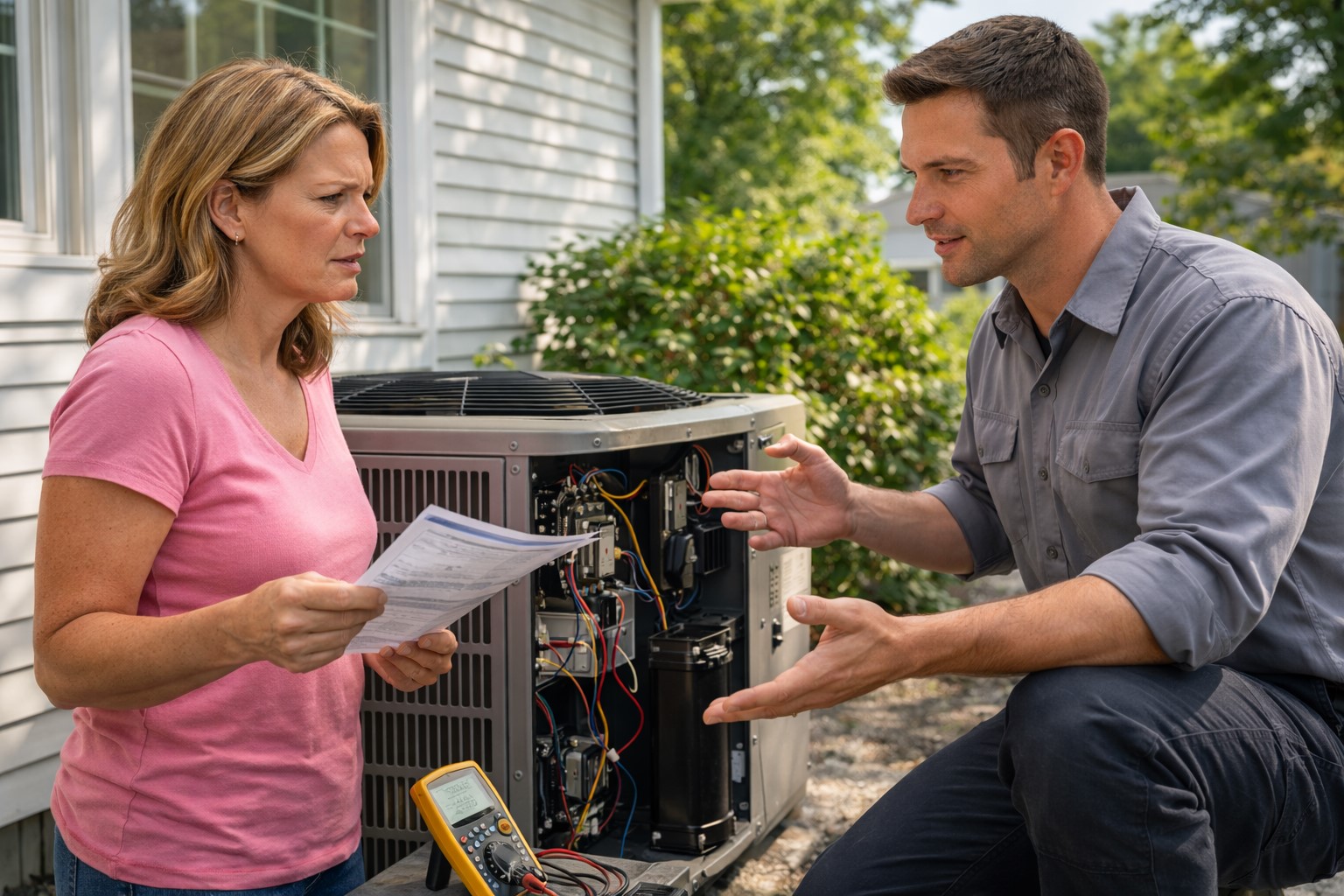
If you are not sure whether repair or replacement is the better path, Valley Air Conditioning & Heating, LLC can evaluate the system condition, explain what is going on, and help you make a practical decision based on the age, refrigerant, warranty status, and overall condition of your equipment.
How Maintenance Helps Prevent Major Compressor Costs
Routine maintenance is one of the best ways to reduce the risk of expensive compressor failure. Dirty, clogged filters reduce airflow and system efficiency, while poor maintenance can contribute to premature compressor or fan failure. Seasonal maintenance also improves airflow, reduces overheating risk, catches refrigerant or electrical problems early, helps the system cool more efficiently, and extends overall equipment life. In other words, regular service does far more than keep the unit clean. It helps protect one of the most expensive parts of your air conditioning system before small performance issues turn into major repair bills.
How Regular Maintenance Protects Your AC Compressor
A simple filter issue can reduce airflow enough to hurt AC efficiency and increase wear on major components. Over time, that added strain can make your system work harder than it should and increase the risk of compressor damage. That means a modest maintenance visit may help you avoid a repair that costs thousands.
FAQs About AC Compressor Replacement in Simsbury, CT
Question: How much does AC compressor replacement cost in Simsbury, CT?
Answer: Most replacements fall around $800 to $2,600+, depending on system size, compressor type, labor, refrigerant, and warranty coverage. The exact cost can also vary based on the age of the system and whether warranty coverage applies.
Question: Is it better to replace the compressor or the whole AC unit?
Answer: If the system is newer and under warranty, compressor replacement may be worth it. For older or R-22 systems, full replacement is often the better investment because it can prevent more expensive repairs later.
Question: How do I know if my AC compressor is failing?
Answer: Common signs include warm air, loud noises, short cycling, breaker trips, and rising energy bills. If several of these symptoms appear at once, it is best to have the system inspected before the damage gets worse.
Question: Can a bad compressor be repaired instead of replaced?
Answer: Sometimes, but internal compressor damage often leads to replacement rather than repair. A professional diagnosis is the only way to know for sure and to determine whether repair is still cost-effective.
Question: Does warranty coverage help with compressor costs?
Answer: Yes. In many cases, warranty coverage may reduce the cost of the compressor itself, though labor and related materials may still apply. That can make replacement much more affordable for homeowners with newer systems.
Question: How can I lower the chance of compressor failure?
Answer: Regular maintenance, prompt filter changes when the filter is designed for homeowner replacement, good airflow, and early repair of electrical or refrigerant issues can all help protect the compressor. Staying on top of these small tasks can reduce strain on the system and improve long-term performance.
Why This Topic Matters for Homeowners in Simsbury
When your compressor starts failing, waiting rarely makes the decision easier. It usually just gives the problem more time to get worse. If your AC is blowing warm air, short cycling, making unusual noises, or struggling to keep up, Valley Air Conditioning & Heating, LLC can help you determine whether compressor replacement or full AC replacement is the smarter move for your home.
Still have questions? Contact Valley Air Conditioning & Heating, LLC to schedule service or request an estimate.