
Keeping your commercial HVAC system operating efficiently is essential for comfort, productivity, and cost control. But regular maintenance and unexpected repairs can strain your budget if they aren’t managed strategically. At Valley Air Conditioning & Heating, we help business owners in Simsbury, CT and surrounding communities lower maintenance costs while maximizing system longevity and performance.
If you’re spending more than you should on HVAC maintenance, this guide outlines proven strategies to reduce expenses without sacrificing reliability or safety.
Why Cutting HVAC Costs the Right Way Matters
Imagine your commercial HVAC system failing in peak winter or summer. Emergency service calls, reduced productivity, and unhappy occupants can cost far more than planned maintenance. The goal isn’t just to spend less—it’s to spend smarter. Proactive maintenance reduces breakdowns, lengthens equipment life, improves indoor air quality, and cuts energy costs.
Signs Your Commercial HVAC System Needs Targeted Maintenance
Weak or Inconsistent Airflow
Reduced airflow often points to clogged filters, duct restrictions, failing blowers, or control issues. Left unchecked, inefficiency increases energy use and equipment wear. Replace filters on schedule and have a licensed professional inspect fan performance, belts, and ducts to avoid costly damage.
Frequent Short Cycling
Short cycling stresses components and drives up utility costs. Common causes include improper thermostat settings, sensor placement, oversized equipment, or refrigerant/controls faults. Have a technician assess root causes before short cycling leads to compressor failure.
Rising Energy Bills
Noticeable increases in energy costs may stem from worn parts, drifting setpoints, sequencing issues across multiple units, or neglected maintenance. Schedule an energy review and consider adjusting schedules, staging, and ventilation rates—or upgrading key components—with guidance from a qualified professional.
Musty or Unusual Odors
Odors often indicate microbial growth, clogged condensate drains, or electrical problems. Shut off the system and call a technician for a full inspection. If you suspect a gas leak or notice a burning smell, evacuate affected areas and contact emergency services or your gas utility before calling your HVAC provider.
Cost-Saving Strategies That Work
Invest in Proactive, Scheduled Maintenance
Reactive repairs are expensive and unpredictable. The smartest way to lower costs is through regular, scheduled maintenance. Preventive service catches small issues before they escalate and helps maintain warranty compliance.
Typical tasks: system calibration, refrigerant analysis, filter changes, coil and drain cleaning, lubrication, belt and bearing checks, electrical testing, economizer and damper verification, control sequence review. Licensed professionals should perform these tasks—while trained staff can handle routine filter changes.
Bundle Maintenance Across Equipment
If your facility has multiple HVAC units, bundling maintenance reduces travel and mobilization time, streamlines scheduling, and improves budgeting accuracy. It also enables technicians to compare unit performance side-by-side and standardize parts.
Use Technology to Monitor Performance
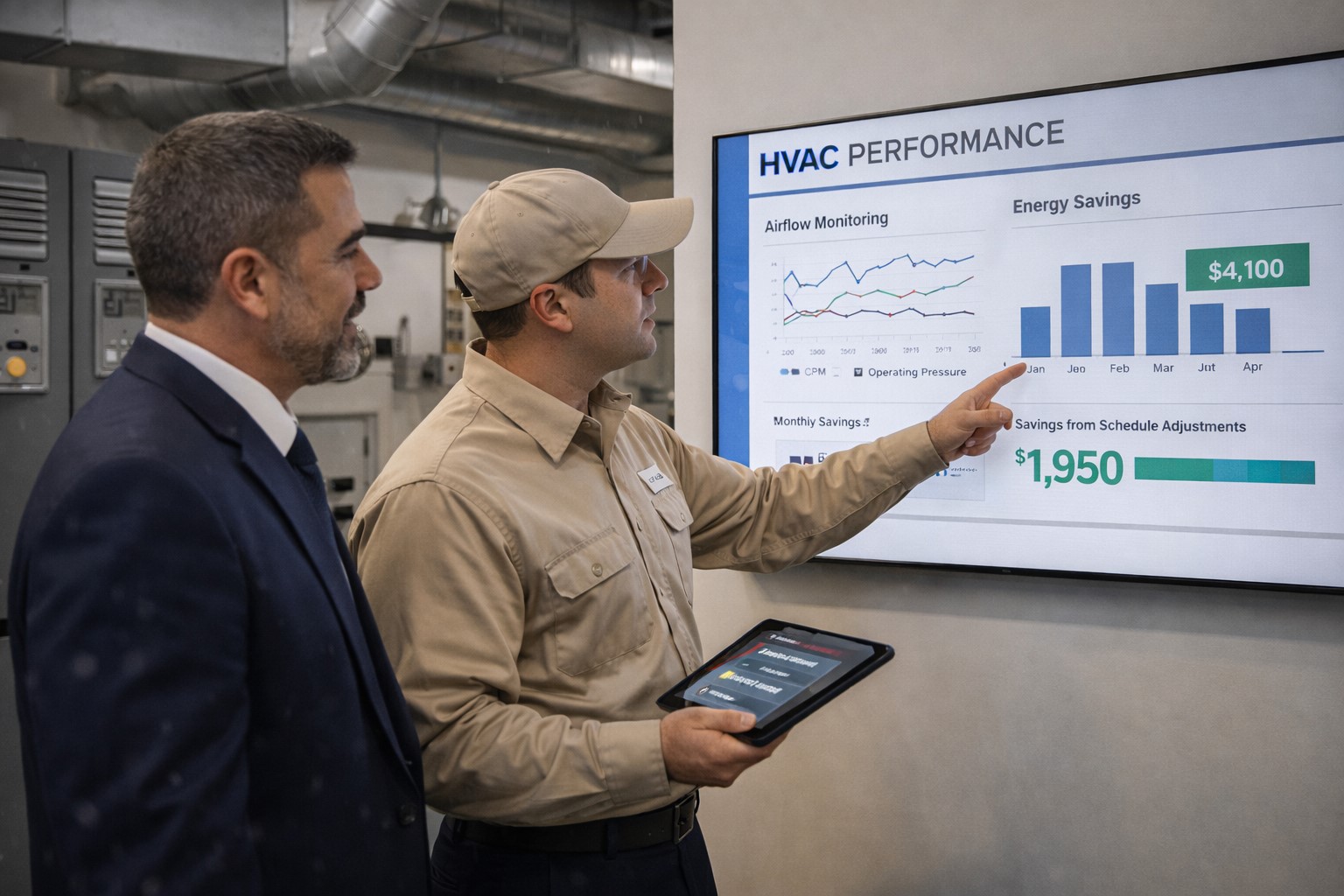
Installing monitoring tools or a building automation system (BAS) helps detect small anomalies before they become costly failures. Properly configured alerts can flag trending fan amps, discharge-air temperature drift, or abnormal runtimes that signal issues early. Have qualified technicians install, commission, and periodically tune these systems.
Optimize Schedules and Controls
Avoid running systems when spaces are unoccupied. Use programmable thermostats, BAS scheduling, and zone controls to match operation with actual occupancy. Optimize ventilation rates, supply-air temps, and staging to reduce energy use without bypassing safety controls.
Avoid DIY Repairs on Complex Systems
Basic tasks—like changing filters or clearing debris—can be handled in-house. But complex repairs on chillers, RTUs, boilers, VAV controls, and high-voltage components should be performed by licensed professionals with the right tools and safety training. DIY missteps often result in repeat calls and higher total costs.
Request a Maintenance Contract for Predictable Costs
Maintenance contracts help control spending with scheduled tune-ups, standardized scope, preferred scheduling, and often discounted labor/material rates. Contracts reduce the risk of large, unexpected repair costs and keep documentation centralized for audits.
Plan Strategic Upgrades When It Makes Sense
If your system is outdated and repair costs are rising, upgrading may save more over time. Modern equipment delivers higher efficiency, better controls integration, and improved reliability. Consider lifecycle cost (not just first cost) and evaluate rebates or incentives that may apply in your area.
Quick Cost-Control Checklist
- Filters replaced on schedule and documented
- Coils and drains cleaned; airflow verified
- Belts, bearings, and electrical tested
- Economizers/dampers inspected and calibrated
- BAS schedules aligned to occupancy; setpoints verified
- Utility bills reviewed for trend changes
- Contract scope defined with seasonal tune-ups and priority service
- Upgrade opportunities evaluated with lifecycle cost in mind
FAQs About Lowering Commercial HVAC Maintenance Costs
Question: How often should commercial HVAC systems be serviced?
Answer: They should be serviced at least twice a year. This keeps the system running efficiently and helps avoid costly failures.
Question: Will regular maintenance really save money?
Answer: Yes, because it prevents breakdowns and improves energy efficiency. Over time, this can significantly reduce operating costs.
Question: Can efficiency upgrades reduce my operating costs?
Answer: Absolutely — modern upgrades improve system performance. They also reduce energy consumption and wear on equipment.
Question: Should I repair or replace an aging unit?
Answer: If repair costs are frequent and rising, replacement is usually more cost-effective. A new system also delivers better energy efficiency and reliability.
Next Steps to Lower Commercial HVAC Maintenance Costs
Lowering commercial HVAC maintenance costs isn’t about cutting corners—it’s about strategic, proactive planning. Regular professional maintenance, smart scheduling, performance monitoring, and well-structured contracts are the foundation.
Ready to get started? Contact Valley Air Conditioning & Heating for a tailored maintenance strategy that protects your budget and your building.