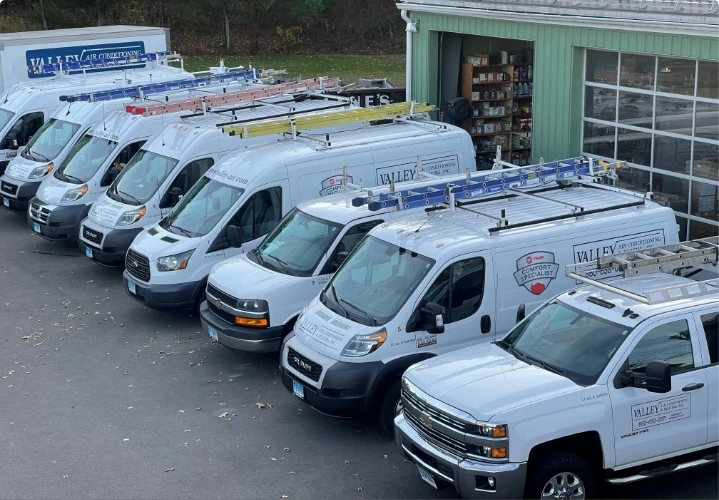

When your heating system starts to falter, the big question is simple—but the answer isn’t: should you repair it or replace it? The right choice affects your comfort, safety, and long‑term costs. Below, we compare typical repair and replacement costs, outline the deciding factors, and explain how Valley Air Conditioning & Heating’s fix‑first philosophy helps Simsbury‑area homeowners choose with confidence.
For more than 35 years, Valley Air Conditioning & Heating has served homeowners in Simsbury, CT and throughout Hartford & Litchfield Counties with helpful, dependable, professional service. Our team is equipped for everything from quick fixes to full system upgrades—and we stand behind our work on every job.

Why This Decision Matters
A quick repair can restore heat fast. But if an aging unit is breaking down repeatedly or wasting energy, replacement may be the smarter investment. Safety comes first: If you smell gas (sulfur/“rotten egg” odor) or your CO alarm sounds, turn the system off from the thermostat or dedicated switch/breaker, evacuate immediately, and contact your gas company or emergency services from outside. If you notice burning smells, smoke, or sparking, shut the system down and call a licensed HVAC technician. Avoid opening equipment panels or attempting DIY fixes on gas or electrical components.
Cost Comparison: Repair vs. Replacement
Repair Costs
Most heating repairs vary based on the part and labor. Lower‑cost fixes can include items like thermostats and certain control components, while more extensive repairs may involve blower motors or heat exchangers.
Repairs tend to make sense when the system is under ~10 years old, the repair is modest relative to full replacement, and the issue is isolated rather than systemic.
Replacement Costs
Pricing for a new heating system depends on fuel type, capacity, efficiency rating, and installation requirements.
Replacement is often the better call when the system is 15+ years old, you’ve needed multiple repairs in the past 1–2 years, utility bills are climbing due to poor efficiency, or there’s a safety concern (e.g., a cracked heat exchanger).
Key Factors That Should Guide Your Decision
System Age
Most heating units last 15–20 years. If yours is approaching that window, replacing can be more cost‑effective than investing in major repairs.
Frequency of Breakdowns
If you’ve called for service more than once or twice recently, the pattern suggests end‑of‑life wear. Replacing now can stop the repair cycle and stabilize your costs.
Efficiency & Energy Use
Older systems often waste energy. Modern furnaces, boilers, and heat pumps deliver significantly higher efficiencies, which can create noticeable monthly savings over time—especially during New England winters.
Safety & Comfort
Issues such as gas leaks, carbon monoxide risks, uneven heating, or frequent short‑cycling are more than inconveniences. If safety or comfort is compromised, prioritize replacement and ensure you have working CO detectors near sleeping areas for fuel‑burning equipment.
How Valley Air Helps You Decide
Our technicians start with a thorough evaluation and a repair‑first mindset. If a safe, reliable repair will keep you comfortable, we’ll recommend it. When replacement is the smarter investment, we’ll explain why with clear options, efficiency comparisons, and expected operating costs—no pressure.
Next Steps if Your Heat Is Acting Up
Schedule a professional inspection, request written estimates for both repair and replacement, compare total ownership costs (energy use, warranty coverage, likelihood of future repairs), and ask about financing if replacement is the right move. If you smell gas or your CO alarm sounds, evacuate immediately and contact your gas company or emergency services from outside; then call us once the scene is safe.
FAQs About Heating Repair & Replacement in Simsbury, CT
Question: How much does a heating repair typically cost?
Answer: It varies by issue, parts availability, and system type. After a diagnostic, we’ll provide a written estimate and discuss repair‑versus‑replace considerations.
Question: When should I replace instead of repair?
Answer: If the unit is older, unreliable, or has repeated failures—and especially if a single repair exceeds 30–40% of a new system—replacement usually offers better long‑term value and peace of mind.
Question: Will a new system save me money?
Answer: Usually, yes. Higher efficiency means lower utility bills and fewer breakdowns. Over time, those savings can offset a portion of the upfront cost.
Question: What if my system breaks down in winter?
Answer: Call a professional right away. Never use ovens, grills, or fuel‑burning space heaters indoors, and never run a generator in a garage or enclosed space.
Making the Smart Choice for Your Home
A single repair may be all you need. But if you’re pouring money into an older, inefficient unit, replacement can deliver safer, steadier comfort and lower lifetime costs. Valley Air Conditioning & Heating has helped Simsbury‑area homeowners make confident decisions for over 35 years—and we’re ready to help you, too.
Ready for clear answers? We proudly serve Simsbury and communities throughout Hartford & Litchfield Counties.